Our why & How
We care for this sacred place with humility and respect, guided by the understanding that ʻāina—the land—is alive and sustaining. To honor ʻāina is to nurture it as it has long nurtured us, listening to its needs and walking alongside it as it heals.
Our Name
ʻĀina is more than the word “land.” It reflects a living relationship—a reciprocal bond between people and the natural world—rooted in sustenance, stewardship, and care. To speak of ʻāina is to recognize the interconnectedness of all life and the kuleana (responsibility) that comes with belonging to it.
ʻĀina Hoʻōla carries two interconnected meanings: “land in the process of healing” and “land that heals.” It reflects both the restoration of the land and the healing that people experience through caring for and reconnecting with ʻāina.
Our work follows the pace of the ʻāina itself, guided by its needs and grounded in care and stewardship. We strive to ʻauamo (carry) the kuleana we have been kauoha ʻia (entrusted) with, recognizing that as the ʻāina sustains us, we have a responsibility to mālama (care for) it.
This work begins with careful kilo (the practice of observation), hands-on stewardship, and a willingness to learn directly from the ʻāina. As the land heals, so do the people who care for it.
Hoʻōla i ka ʻāina. — Vivify the land.
Our Values
From the beginning, our work has been guided by ʻike kupuna—the traditional wisdom of Hawaiʻi that reminds us of our deep kuleana to ʻāina and to one another. These ʻōlelo noʻeau are at the heart of what we do, guiding our work at Lokowaka and shaping our journey alongside the ʻāina. They inspire us to observe, learn, work together, remain steadfast through challenges, and carry out our kuleana with care and commitment.
He aliʻi ka ʻāina, he kauwā ke kanaka.
The land is chief, the man is its servant.
Nānā ka maka; hoʻolohe ka pepeiao; paʻa ka waha; hana ka lima.
Observe with the eyes; listen with the ears; shut the mouth; work with the hands.
Ma ka hana ka ʻike.
In working, one learns.
ʻAʻohe pau ka ʻike i ka hālau hoʻokahi.
All knowledge is not taught in the same school.
E lawe i ke aʻo a mālama, a e ʻoi mau ka naʻauao.
He who takes his teachings and applies them increases his knowledge.
ʻAʻohe hana nui ke alu ʻia.
No task is too big when done together by all.
ʻAʻohe mea nāna e hoʻopūhili, he moho no ka lā makani.
There is nothing that can blow him aside, for he is a moho (flightless Hawaiian rail) on a windy day.
Humble
Beginnings
Our journey began quietly—
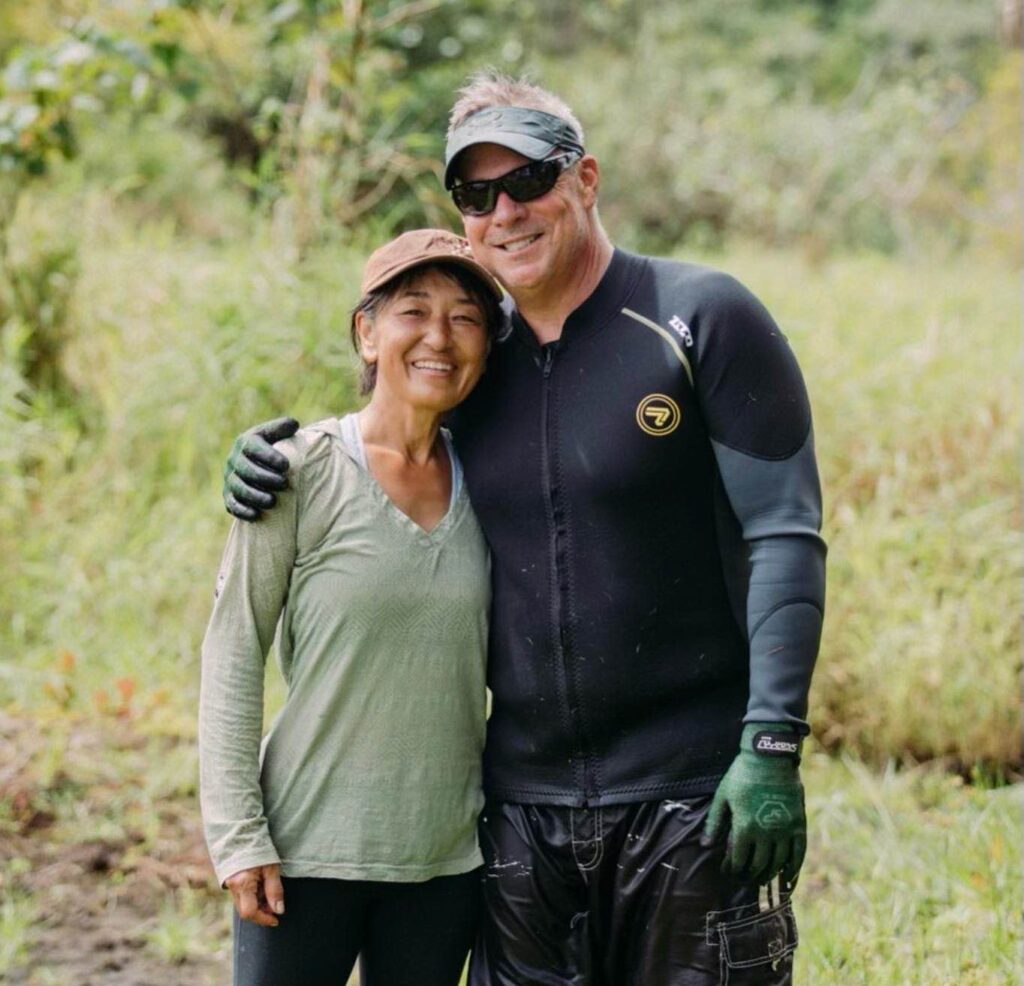
with two sets of hands, Kumiko’s and Patrick’s,
in 2021, during the COVID pandemic,
and the memory of a single aeʻo
(an endangered Hawaiian stilt)
seen at Lokowaka in 2011.
That brief encounter reminded us
of what once thrived here—
and what still could.
As invasive plants were removed
and water began to flow again,
habitat gradually recovered.
The ʻāina revealed its stories,
and life returned.
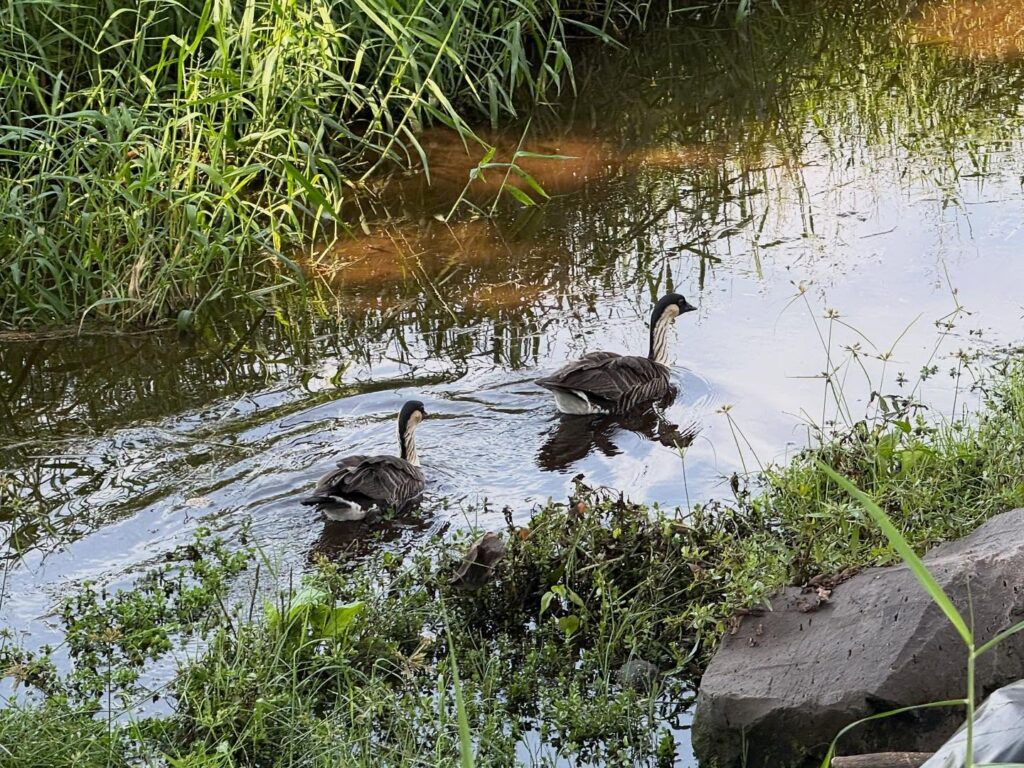
The nēnē (threatened Hawaiian goose) appeared early on,
and in 2022, a pair of aeʻo landed once more—
a powerful sign of hope.
Soon, ʻalae keʻokeʻo (endangered Hawaiian coots) multiplied,
reflecting the recovery of the wetland
and the growing biodiversity it supports.
What began with two hands
has grown into many.
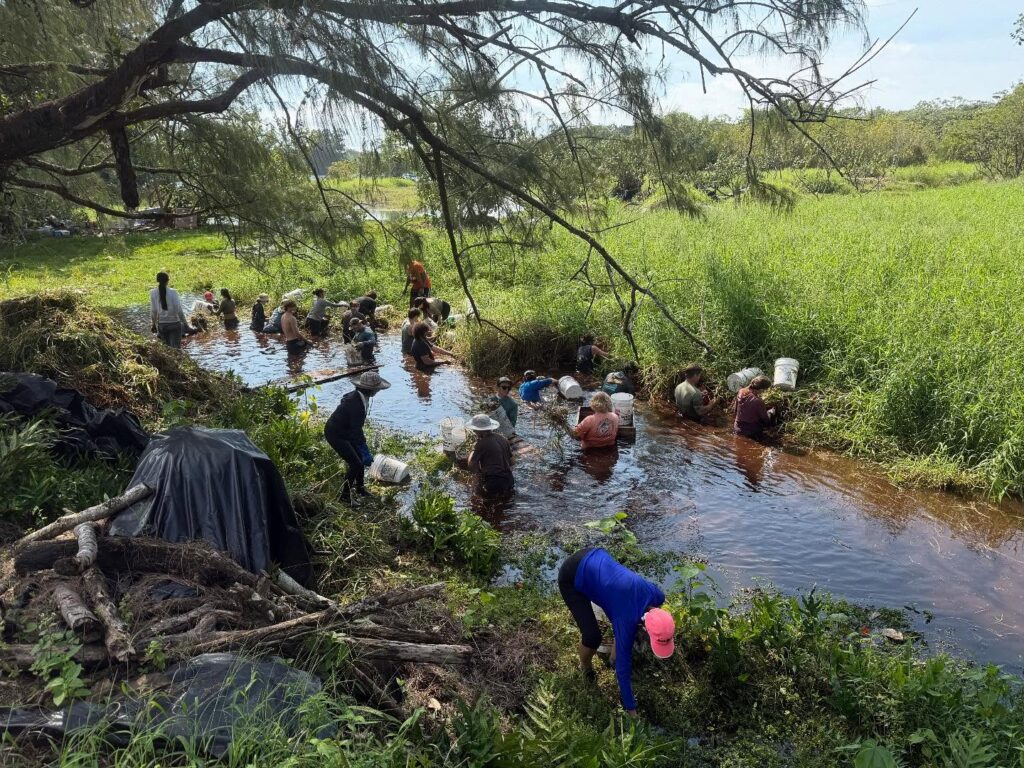
Through community-based, hands-on stewardship,
volunteers and partners have become part of Lokowaka’s healing,
strengthening relationships between people and ʻāina.
And still, the journey continues.
As water flows more freely,
native aquatic species thrive,
native plants return,
and birds find habitat once again.
We will continue walking with the ʻāina—
helping Lokowaka heal and thrive
for generations to come.
The ripples are spreading.